

Smart glass is being adopted across corporate boardrooms to provide configurable visual privacy, controlled sightlines, and secure glazing states that complement encryption and access controls. It reduces HVAC and lighting loads through dynamic tinting and programmable schedules, enabling measurable sustainability gains. Integration with AV smart glass Malaysia, sensors, and BMS requires coordinated latency, QoS, and firmware management to preserve meeting experience. Design choices balance optics, materials, and brand identity. Further sections explain integration, operations, and total cost implications.
How Smart Glass Enhances Privacy and Security in Boardrooms
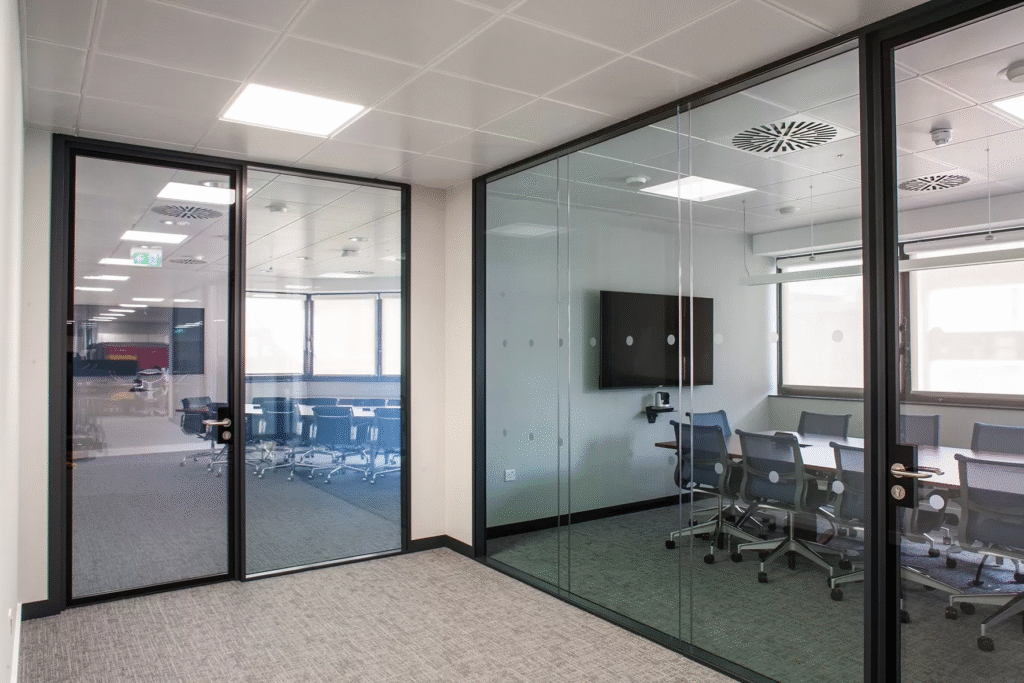
When integrated into executive suites, smart glass provides configurable sightline control and electronic opacity that reduces visual eavesdropping without altering room acoustics, enabling organizations to enforce physical-layer confidentiality policies smart glass windows. The technology enables privacy shading modes and programmable secure glazing states, granting occupants immediate control over exposure. Administrators can integrate access controls, audit logs, and timed shifts to align visibility with meeting classification. Deployment strategies emphasize minimal workflow disruption and interoperability with building management systems. Risk assessments treat smart glass as a deterministic boundary control that complements encryption and policy, offering a visible, user-enabled layer of freedom-preserving privacy and rapid operational assurance.
Energy Efficiency and Sustainability Benefits for Meeting Spaces
Leveraging dynamic opacity and solar-control properties, smart glass reduces HVAC load and artificial lighting demand in meeting spaces by selectively modulating solar heat gain and daylight penetration. The technology enables measurable energy savings through programmable glazing schedules, responsive tinting and integration with building management systems. Sustainability gains include reduced carbon footprint, longer asset life for lighting, and alignment with green certifications. Strategic deployment preserves occupant autonomy while optimizing resource use.
- Conference room bathed in controlled natural light, minimizing electric lighting use.
- Tinted façade lowering peak cooling loads during summer afternoons.
- Automated schedules aligning glazing state with occupancy for continuous daylight harvesting
Integrating Smart Glass With AV and Hybrid Meeting Technology
Beyond energy and sustainability advantages, smart glass must be architected to coexist with audiovisual and hybrid meeting systems without compromising performance or user experience. Integration requires specification of control layers, sensor harmonization, and signal routing so interactive translucency functions do not create glare, reflections, or RF interference during video conferencing. AV teams should map latency budgets and establish protocols for synchronized state changes across displays, cameras, and lighting. Network architects must guarantee seamless connectivity and prioritize QoS for real‑time media. Operational policies and firmware versioning preserve interoperability. When executed precisely, smart glass augments collaboration while preserving freedom of layout and technology choice.
Design Considerations and Aesthetic Impact on Corporate Spaces
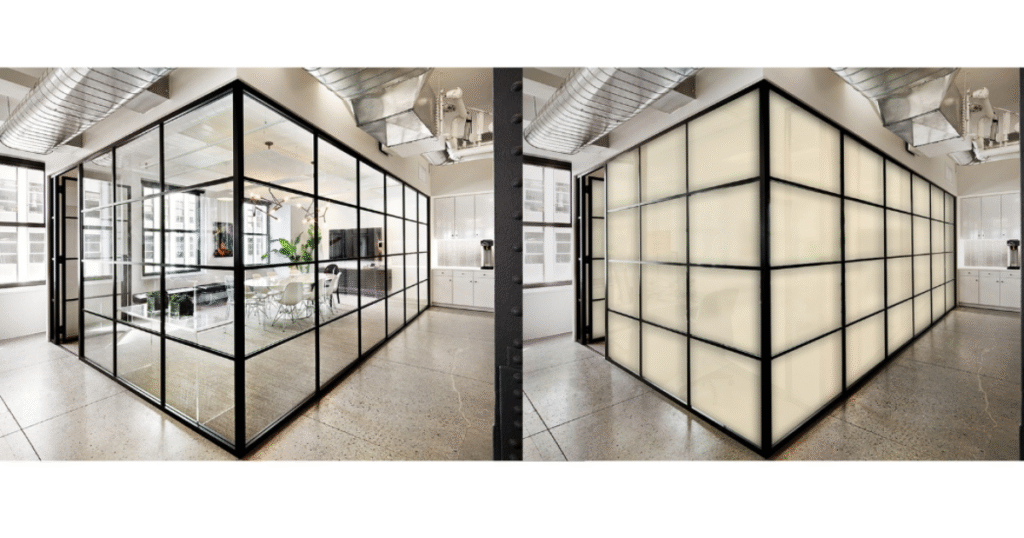
In considering smart glass for corporate interiors, design teams must balance optical performance, user experience, and brand aesthetics to guarantee the installation enhances both function and corporate identity. Strategic selection of finishes and proportions aligns sightlines with privacy targets while preserving openness. Attention to material textures and lighting integration refines perceived quality and supports flexible atmospheres. Visual cohesion with signage, furniture, and color palettes sustains brand narrative. Performance metrics inform transparency gradations without dictating form. Designers prioritize modularity and intuitive control to empower occupants. The result is a liberated workspace that communicates clarity, restraint, and purposeful elegance.
- Matte interlayers juxtaposed with clear panels
- Integrated cove lighting accentuating edges
- Frosted bands echoing corporate geometry
Implementation Best Practices and Total Cost of Ownership
Having established how finishes, sightlines, and lighting shape user experience and brand coherence, project teams must next address practical implementation and lifecycle economics to guarantee performance objectives are met over time. Implementation best practices prioritize rigorous vendor selection, clear installation protocols, and compatibility testing with AV, HVAC, and security systems. Total cost of ownership assessment quantifies upfront hardware, integration, energy, and end-of-life disposal costs. Maintenance planning schedules firmware updates, glass cleaning, and component replacement to sustain transparency performance and warranty compliance. Decision frameworks weigh flexibility, upgrade paths, and vendor SLAs to preserve operational freedom and control long-term expenditure.
Conclusion
Smart glass adoption in corporate boardrooms delivers measurable strategic value: it enhances privacy and information security, reduces HVAC and lighting loads for long‑term energy savings, and integrates seamlessly with AV and hybrid meeting systems to support secure collaboration. Design choices balance aesthetics with acoustic and glare control while installation planning and lifecycle cost analysis optimize total cost of ownership. Executed with clear technical specifications and governance, smart glass becomes a scalable, sustainable asset aligned with enterprise facility and IT strategies.
